The fire door checks, and what a defensible record of one looks like.
Regulation 10 of the Fire Safety (England) Regulations 2022 sets quarterly and annual fire door duties for responsible persons. It does not prescribe a checklist, and it does not say what your record has to look like — which is the part most people are actually asking about.
The duty
What Regulation 10 asks for
Quarterly, communal doors
In buildings with two or more sets of domestic premises and a storey over 11 metres, all fire doors in the common parts, including their self-closing devices.
Annually, flat entrance doors
In the same buildings, on a best-endeavours basis — genuine, repeated, recorded attempts at access, and a record of the attempts where you cannot get in.
Information for residents
In all buildings with common parts, whatever their height, a recurring duty to tell residents why fire doors matter and how to report a fault.
This describes the duties in general terms. It is not advice about your building, and it does not replace your fire risk assessment or the guidance published alongside the Regulations.
The record
A blank against a flat is not evidence. Three documented attempts are.
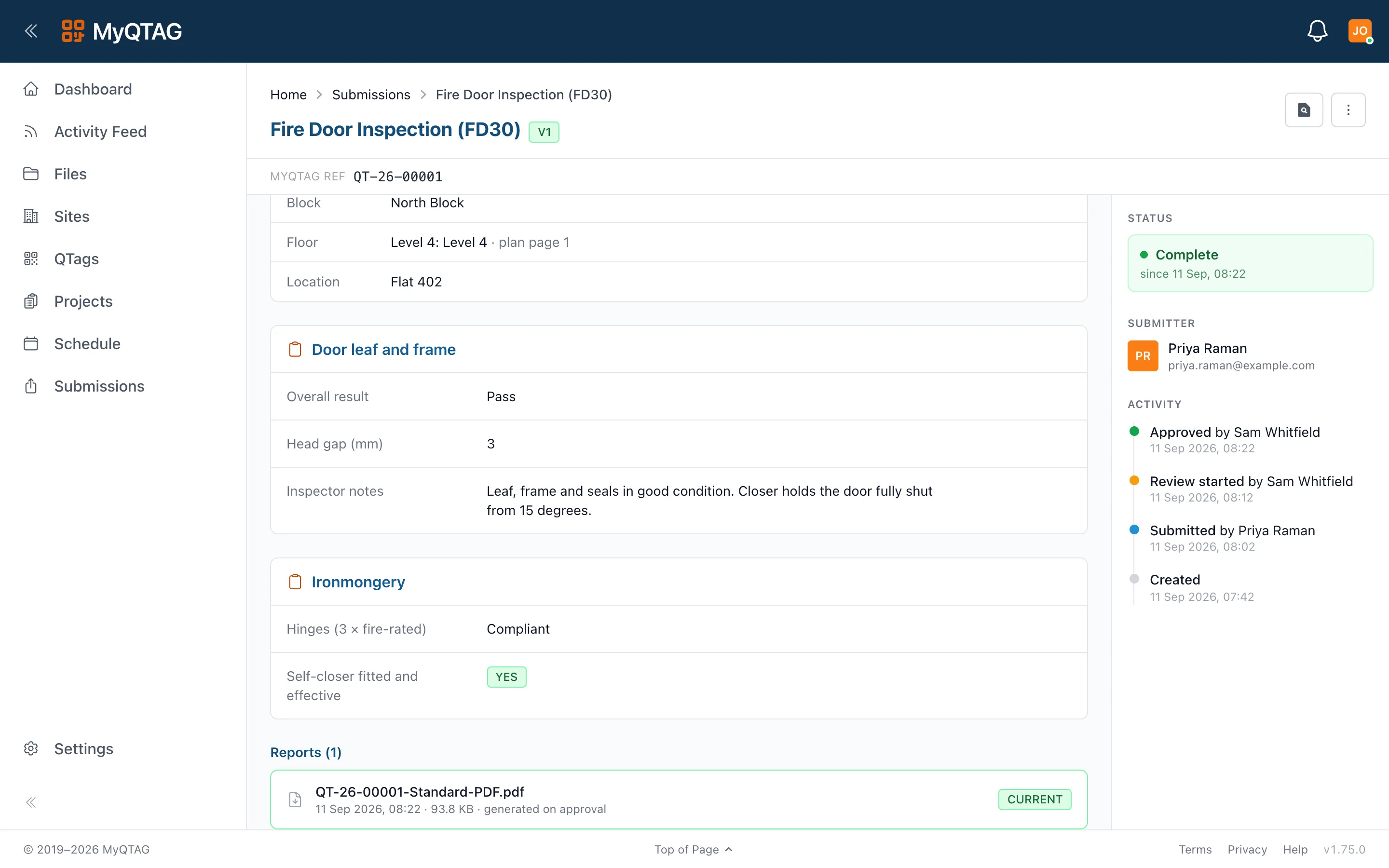
The Regulations require the checks and say nothing about the format of the record, so what makes one defensible is what it can show: who checked, when, against what, what they found, and what happened next. That is a question about your records rather than about software — and it is the question this product exists to answer.
- Which basis the check was carried out on, recorded rather than assumed
- The door identified by a tag rather than by a description of where it is
- Photographs, a named person and a time, captured at the door
- Attempted access recorded as an outcome, not left blank
- Every check kept, so the position at any past date is still readable
How MyQTAG helps
One record per door, and it stays with the door
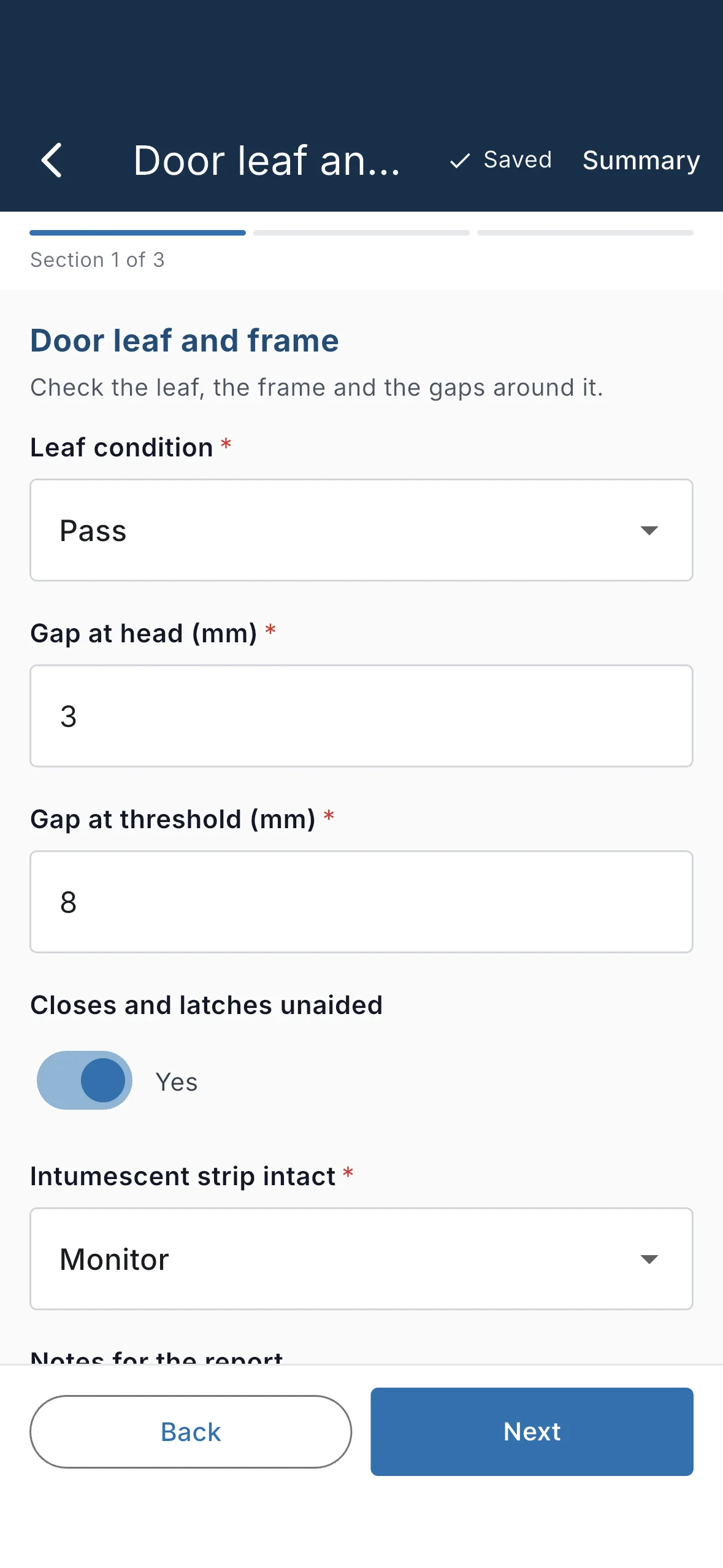
Every door carries a QTAG. Checks are captured against your own template on the phone, offline, and attach to that tag — whoever carried them out and whoever holds the contract next. The register is what you show; the report is what you send.
- Your template, your check basis, your fields — MyQTAG prescribes none of them
- Quarterly and annual rounds recorded as separate checks on the same door
- History that survives a change of contractor
- Branded reports and exports produced from the record, not typed up from it
Who it's for
Two ways into the same record
Contractors
You carry out the checks
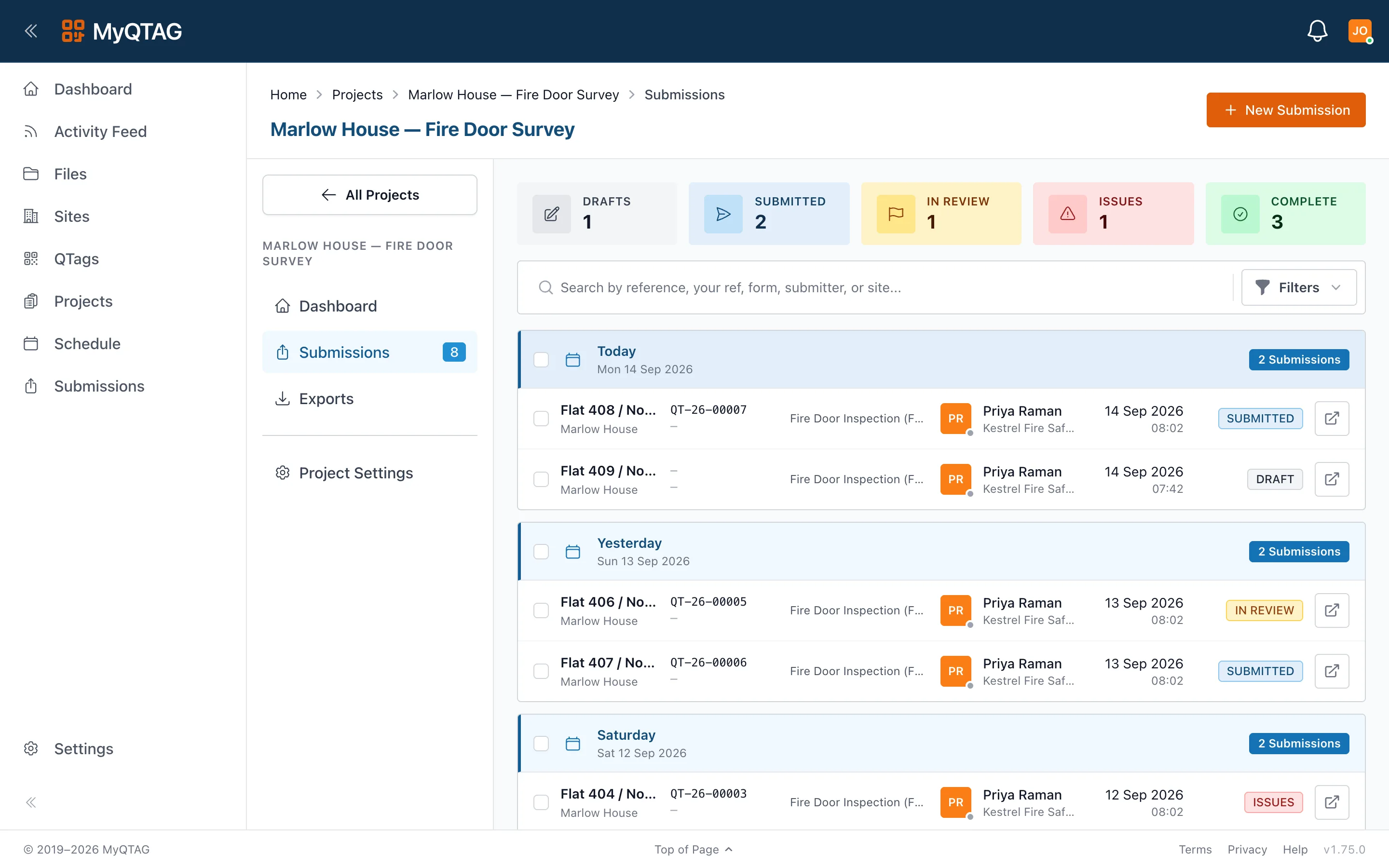
Capture the round against your own template, offline, and hand over evidence the client can file rather than retype.
See the contractor workflow
Building managers
You hold the duty
The schedule, the evidence and the gaps in one register, for every door across the estate.
See it from the estate side
Show us a block and we will show you its register.
Bring a floor plan to a 30-minute demo and see the round, the record and the report on a building you know.